
Transport
The CAREC region is at the heart of the rapidly growing and integrating Eurasian continent. CAREC countries are working together to improve the region’s transport infrastructure and reduce the cost of trade across regions.
The CAREC Transport Strategy (CTS) 2030 was endorsed by the CAREC Ministers in November 2019. Based on the midterm review of the CAREC Strategy 2030 endorsed in 2024, the Midterm Review (MTR) of CTS 2030 was conducted in 2025 through consultations with CAREC countries and development partners, and its report was published in March 2026. The CTS MTR was conducted in close collaboration with the MTR of the CAREC Integrated Trade Agenda (CITA) 2030 and the CAREC Digital Strategy 2030.
The CTS 2030 has successfully delivered improvements in the strategic objectives of connectivity and sustainability, and the MTR introduced a third objective of sustainability. The MTR also concluded that the CTS’s five strategic pillars—(i) cross-border transport and logistics facility, (ii) roads and road asset management, (iii) road safety, (iv) railways, and (v) aviation—continue to be relevant. To reflect the rapidly changing regional landscape and incorporate emerging and innovative technologies, the MTR provided four key recommendations:
- Strengthen Cross-Border Transport and Corridor Efficiency,
- Promote Modal Diversification and Smart Mobility,
- Scale Up Green, Resilient, Inclusive, and Digitalized Transport, and
- Deepen Institutional Collaboration and Future Planning.
The CAREC program will continue to provide a communication and coordination platform for the CAREC countries and development partners to present and discuss new projects and transport initiatives. This will enable the countries to align their priorities with each other and achieve the MTR recommendations.
View Transport Sector Progress Report and Work Plan (April 2024 – May 2025): English | РУССКИЙ
View Transport Sector Progress Report and Work Plan (July 2023–June 2024): English | РУССКИЙ
View Transport Sector Progress Report and Work Plan (July 2022–June 2023): English | РУССКИЙ
View Transport Sector Progress Report and Work Plan (July 2021–August 2022): English | РУССКИЙ
View Transport Sector Progress Report and Work Plan (July 2020–August 2021): English | РУССКИЙ
View Transport Sector Progress Report and Work Plan (July 2019–August 2020): English | РУССКИЙ
Developing CAREC Corridors
CAREC focuses investment and other activities on the development of six competitive transport corridors that link north, south, east, and west through the pivot of Central Asia. The corridors reflect trade flow patterns and will speed the movement of people and goods across the region. Critically, they also connect the mainly landlocked CAREC countries to wider regional and global networks.
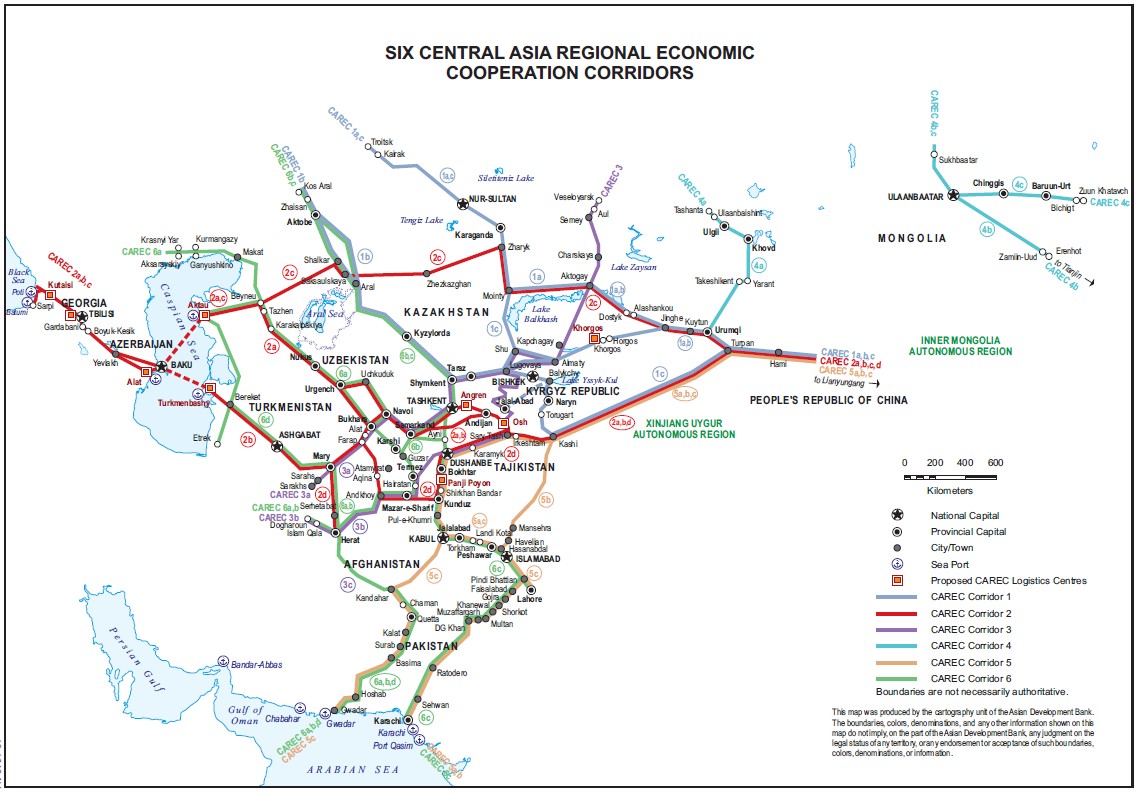 (
(Learn more about CAREC Transport Corridors
Transport Sector Coordinating Committee
The Transport Sector Coordinating Committee (TSCC) guides strategic decision making and planning for all transport-related investments. It also coordinates other sector-wide issues and activities, including events and capacity-building activities, identifying transport sector pilot projects and development issues with sector-wide implications, and coordinating the work of transport project working groups.
The TSCC regularly reports and makes recommendations to the CAREC Senior Officials’ Meeting, which in turn informs the CAREC Ministerial Conference. It meets at least once a year, and the host country for each committee meeting acts as the official chair of that meeting.
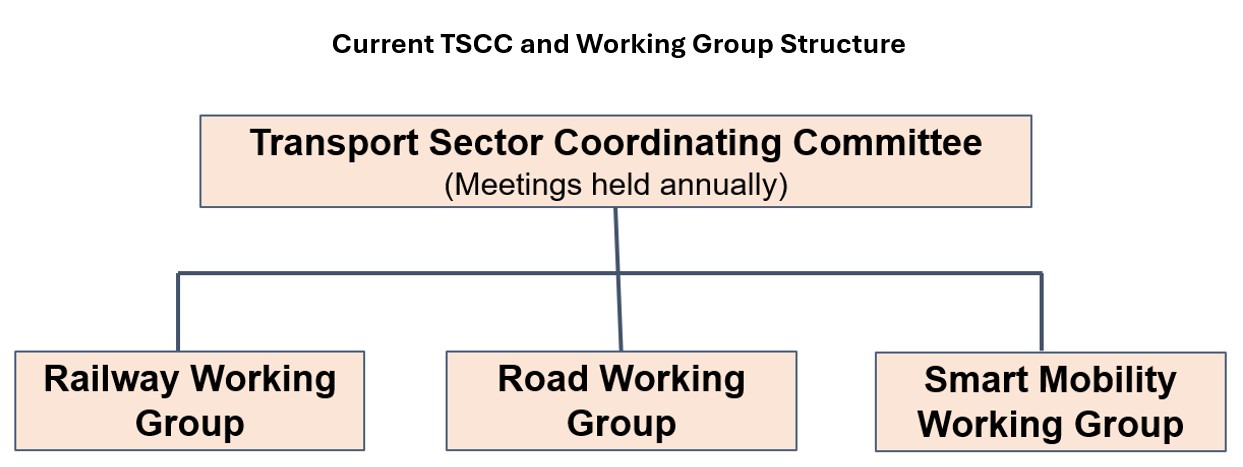
(Refer to the CAREC institutional framework for more information on sector coordinating committees.)
Partnerships
CAREC development partners in the transport sector share responsibility in providing directions and drawing up priority actions. This section provides a communication platform for development partners to present projects and transport initiatives as well as features works and achievements of development partners in the CAREC Transport program.